Upper blepharoplasty and a brow lift are both facial surgeries that can improve hooded eyes, but they address distinct issues. Upper blepharoplasty removes excess upper eyelid skin and, when appropriate, fat, while a brow lift raises a low or drooping brow. The right procedure depends on where the hooding begins.
With Northwest and Westlake offices in Austin, TX, Austin Eye Clinic treats cosmetic and functional eyelid concerns. Oculofacial plastic surgeon Krista Stewart, MD, is a board-certified ophthalmologist who completed an ASOPRS oculoplastic surgery fellowship at the University of Minnesota and Mayo Clinic.
What Causes Hooded Eyes?
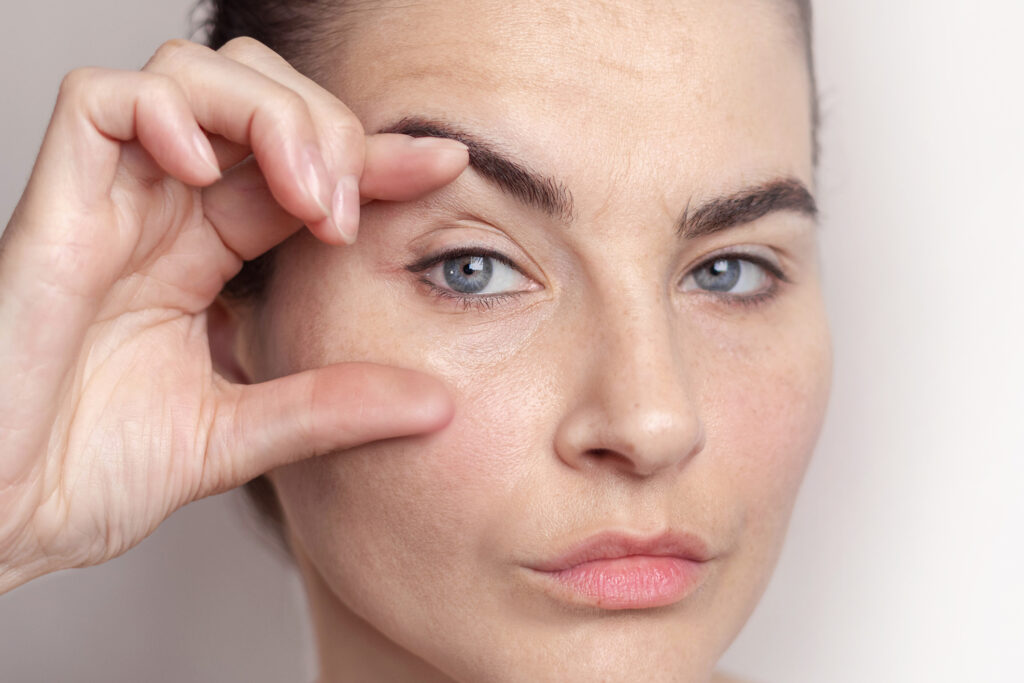
“Hooded eyes” can describe several changes around the upper eye. Extra eyelid skin, known as dermatochalasis, may hang over the natural crease. A low brow, called brow ptosis, can also push tissue downward and make the upper eyelid look heavier. Some people have both.
True eyelid ptosis is different. It occurs when the eyelid sits too low because the structures that lift it aren’t working normally.
When Does Upper Blepharoplasty Make More Sense?
Upper blepharoplasty is often considered when excess skin and fat on the upper eyelids create most of the hooding and brow position isn’t the main cause. During surgery, extra tissue is removed to create a more open upper-lid contour.
Blepharoplasty changes the eyelid, not the eyebrow position. If your brows sit low and push tissue toward the eyelids, removing eyelid skin alone might leave some heaviness in place.
When Does a Brow Lift Make More Sense?
A brow lift is used when low or sagging eyebrows are a major source of the hooded appearance. Raising the brows can reduce downward pressure over the upper lids and open the eye area.
Brow-lifting options include endoscopic, temporal, direct, and traditional techniques. For mild brow ptosis, an internal browpexy is sometimes combined with upper blepharoplasty to support and subtly raise the outer brow without another external incision.
Can You Need Both Surgeries?
Yes. Excess upper-lid skin and brow ptosis may occur together, so treating both areas makes sense when multiple factors contribute to the hooding. During your exam, Dr. Stewart will assess your brow position, eyelid skin, and eyelid height to determine what’s causing the heaviness and the most appropriate approach.
Learn Which Option Fits Your Hooded Eyes
Deciding between upper blepharoplasty and a brow lift starts with identifying the source of the hooding. Contact us at Austin Eye Clinic in Austin, TX, or call 512-250-2020 to meet with Dr. Stewart and discuss your surgical options.